

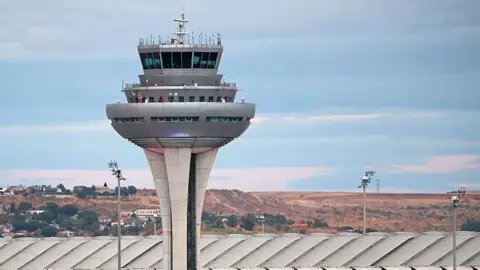
The Spanish government has closed its airspace to American military aircraft involved in attacks on Iran, as stated by Madrid's defense minister Margarita Robles.
Government Position
"We will not authorise the use of our military bases for any operations related to the Iran hostilities," she said, adding that Spain had "expressed this stance to the American government from the start."
The top diplomat José Manuel Albares said the aim of the decision was to "not do anything that could fuel an escalation in this conflict."
American Reaction
The American administration did not immediately comment, but US President Trump has earlier warned to enact a comprehensive trade ban on Spain over its objection to the Iran war.
Spanish Prime Minister's Stance
Since the start of the war in February, the Spanish Prime Minister Pedro Sánchez has been a prominent voice against of the American and Israeli strikes, describing them as "irresponsible" and "illegal."
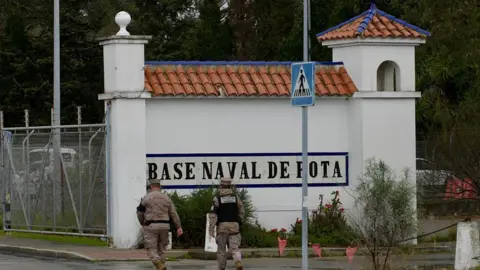
Last month, he confirmed Spain had refused the US use of the two jointly run military bases at Rota and Morón, both in Andalusia.
"Spain is a sovereign nation that does not wish to be involved in unlawful conflicts," Sánchez asserted.
Last Wednesday that "any proposed route that entailed operations related to the operation in Iran were denied - all of them, including those of support planes."
Logistical Consequences
Some US bombers involved in operations in Iran are stationed at the RAF Fairford base in the UK, subsequent to London's approval to a appeal from the US.
Bombers launching from there will be compelled to avoid much of the Iberian peninsula - by routing across the eastern Atlantic or through France.
Sources state that planes would be permitted to transit through Spain's skies or land at the bases only for a dire need.
Historical Stance
In a national broadcast, the leader discussed global hostilities and stated the Spanish government's policy could be encapsulated as "no to war."
Subsequently, the Iranian embassy in Spain said Tehran would be receptive to appeals from Madrid concerning shipping through the critical waterway because Spain was "a supporter of global norms."
Market Effects
Around a significant portion of the world's oil supply usually transits through the narrow waterway separating Iran and the tip of the Arabian peninsula.
In recent times, the danger of strikes by Iranian drones, missiles has forced its closure, triggering a spike in oil prices.


